
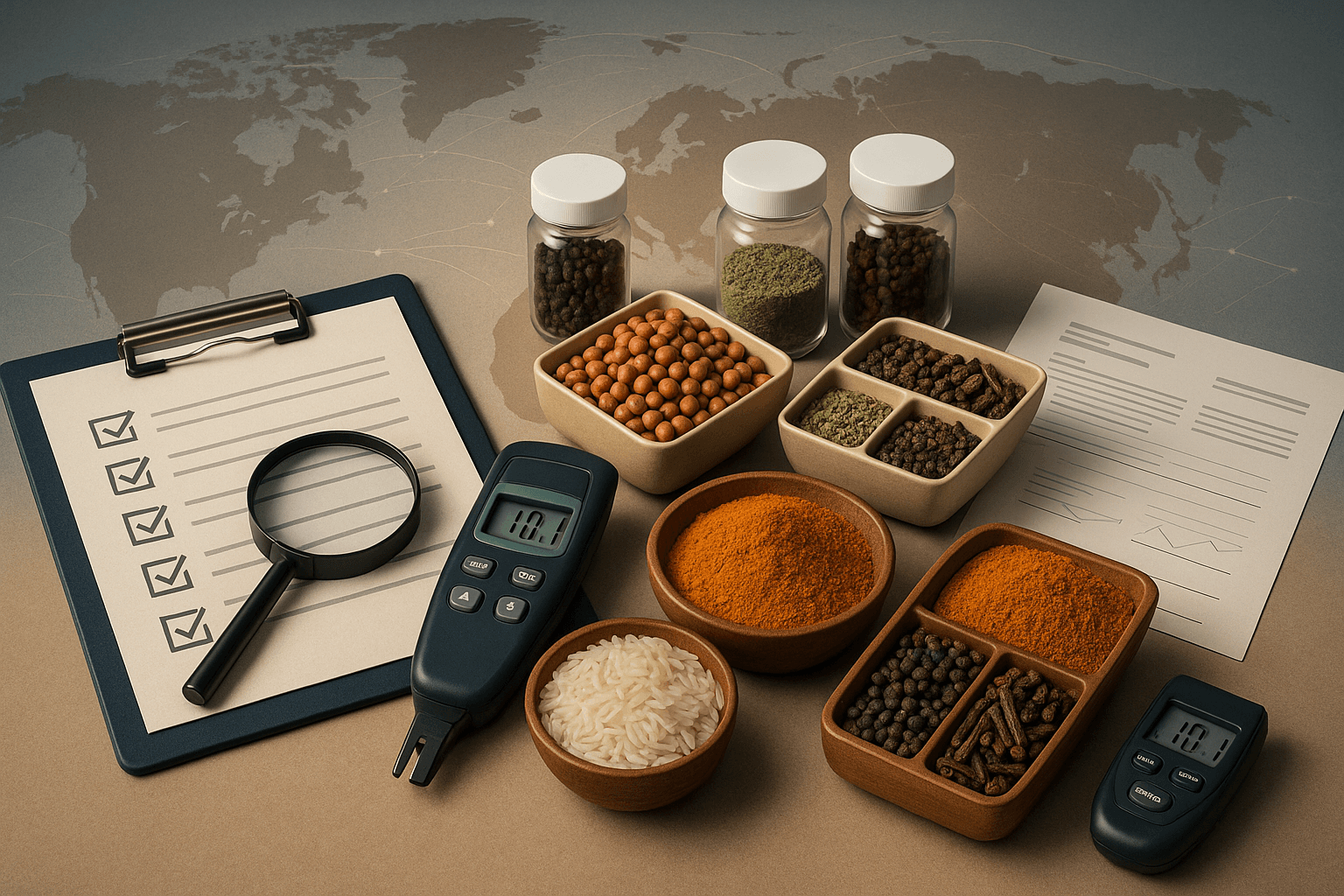
A technical guide for global importers by Spice of Indian
1. Introduction
As global demand for authentic, clean-label food ingredients continues to surge, India stands as one of the world’s largest and most trusted suppliers of spices, herbs, rice, and pulses. However, for international buyers—wholesalers, distributors, private label brands, food manufacturers, and procurement teams—understanding Indian quality grading systems is critical for making safe, compliant, and profitable sourcing decisions.
Quality grades directly impact:
- Product pricing
- Shelf life & storage stability
- Flavor, aroma, and functional strength
- Regulatory compliance (EU, US FDA, Middle East)
- Consumer safety and satisfaction
- Import approvals and customs clearance
Choosing the wrong grade—or misunderstanding Indian quality specifications—can result in rejected consignments, financial losses, and compliance failures.
At Spice of Indian, our mission is to supply premium, lab-tested, export-compliant Indian products backed by strict quality grading, moisture control, sterilization options, and traceability. This guide presents a complete breakdown of Indian grading standards used by exporters, processors, and commodity boards—giving buyers the clarity they need to confidently source from India.
2. How Quality Grading Works in India
India’s export ecosystem follows a mix of government-defined, commodity board-regulated, and market-driven quality specifications.
Government Grading Systems
India regulates food quality under:
- FSSAI (Food Safety and Standards Authority of India) – mandatory for domestic & export food safety
- AGMARK – traditional grading standard for agricultural commodities
- Bureau of Indian Standards (BIS) – standard codes for certain products
While AGMARK is not compulsory for export, many exporters use AGMARK standards for internal grading benchmarks.
Commodity Boards
a. Spices Board India
Responsible for:
- Quality monitoring
- Export inspection
- Sampling & lab testing
- Registering approved spice exporters
Relevant for: Pepper, Cardamom, Clove, Turmeric, Ginger, Nutmeg, Mace, Cumin, Coriander, etc.
b. APEDA (Agricultural & Processed Food Products Export Development Authority)
Regulates:
- Rice
- Fruits & vegetables
- Herbs
- Processed foods
- Organic products (NPOP)
c. EIC (Export Inspection Council)
Oversees:
- Export inspection norms
- Quality certifications
- Contaminant limits
International Market Standards
India must also comply with:
- EU Regulations (MRLs, contaminants, aflatoxin limits)
- US FDA food safety standards
- GCC/ Middle East specifications
- ASTA color values for spices
These influence Indian exporters’ grading practices, especially for high-sensitivity crops like turmeric, chili, black pepper, cumin, and basmati rice.
3. Key Quality Parameters International Buyers Must Know
Understanding these grading metrics ensures you procure the correct grade for retail, food processing, extraction, or bulk trading.
3a. GL Density (Bulk Density / G.L. Grade)
GL Density is one of the most important grading factors for whole spices.
Used heavily for:
- Black Pepper
- Cloves
- Nutmeg
- Coriander Seeds
- Mustard Seeds
How GL Density Works
Higher GL (gram/litre) = heavier spice = higher maturity, higher oil content, higher quality.
Black Pepper GL Grades
| Grade | GL Value | Market Use | Quality Insight |
|---|---|---|---|
| FAQ | 500 GL | Low-end retail | Low oil, lightweight |
| Medium Grade | 550–580 GL | Regular retail | Balanced quality |
| Export Grade | 600 GL | International retail / bulk | High maturity |
| Premium Grade | 630–650+ GL | Europe & USA | High piperine, high oil |
Cloves GL & Purity
- Premium cloves: 95–97% purity, high density
- Lower density cloves indicate young buds with low oil content
Why Density Matters
- Higher oil content → stronger aroma & flavor
- Less shrivelled / hollow seeds
- Better extraction yield for oleoresins
- Higher export value (price per MT)
3b. Mesh Size (Ground & Powdered Spices)
Mesh determines the fineness of powders such as turmeric, chili, coriander, ginger, garlic, pepper.
Common Mesh Grades
- 40 Mesh – Coarse (industrial use)
- 60 Mesh – Standard retail grade
- 80 Mesh – Fine powder
- 100 Mesh – Premium fine, pharma-grade
Uses
- Retail brands: 60–80 mesh
- Food processing: 40–60 mesh
- Extraction/pharmaceutical: 80–100 mesh
Mesh size affects:
- Texture
- Heat stability
- Color intensity
- Mouthfeel in finished foods
3c. Purity Percentage
Purity is one of the most demanded specifications in export trading.
Includes:
- Admixture % (other seeds mixed accidentally)
- Extraneous matter (dust, sticks, stones)
- Stem content (herbs, teas)
- Broken grains % (rice, pulses)
Examples:
- Cumin: 99% purity / 99.5% purity (premium)
- Turmeric Fingers: Max 1–2% extraneous matter
- Basmati Rice Broken %: 5%, 10%, 25%, 100%
Higher purity = better sorting & cleaning → higher cost.
3d. Moisture Levels
Moisture determines shelf life, safety, mold risk, and shipment stability.
Export Moisture Standards
| Commodity | Max Moisture | Notes |
|---|---|---|
| Black Pepper | 12% | Higher → mold risk |
| Turmeric | 10–12% | Must avoid fungal growth |
| Cloves | 12% | High moisture reduces oil content |
| Basmati Rice | 12–13% | Essential for long storage |
| Pulses | 10–12% | Over 12% unsafe for long transit |
Why Moisture Control Is Critical
- Prevents mold, aflatoxins
- Reduces insect infestation
- Ensures long ocean transit safety
- Mandatory for EU import compliance
3e. Essential Oil Content (for Spices)
Essential oils define aroma, flavor strength, and market value.
Examples:
- Clove Bud Oil: 15–18%
- Cardamom Oil: 2–9% depending on grade & region
- Black Pepper Piperine: 7–10%
Higher oil = premium grade, superior extraction yield.
3f. Residue & Contaminant Standards
Essential for EU, US, Middle East markets.
Includes:
- Pesticide residue limits (MRLs)
- Aflatoxin limits for chili, turmeric, nuts
- Microbial limits (TVC, yeast, mold)
- Heavy metals (Lead, Cadmium, Arsenic)
- Sterilization:
- ETO-Free
- Steam sterilized (preferred for EU)
Exporters must supply lab reports verifying compliance.
4. Commodity-Specific Grading Guides
4a. Spices
Cardamom Grades
Cardamom is graded by size, color, density, and appearance.
| Grade | Size (mm) | Description |
|---|---|---|
| Bold Premium | 7.5mm+ | Deep green, spherical |
| Export Grade | 7mm+ | High aroma |
| Standard | 6.5mm | Regular retail |
| Mix Quality | <6mm | Low-grade |
Color: Deep green = premium; pale = lower grade.
Turmeric Grades
Based on origin, color, curcumin content, and finger shape.
- Salem Turmeric: 2–4% curcumin
- Alleppey Turmeric: 3–5% curcumin (bright yellow)
- Ground Turmeric: Mesh size + curcumin % define grade
Black Pepper
Indian pepper is graded as:
- MG1 (Malabar Garbled 1) – premium
- TGEB (Tellicherry Garbled Extra Bold) – highest quality
- FAQ – medium quality
- ASTA Color: 160–300 (higher = better visual appeal)
Cloves
Graded by:
- GL density
- Head size
- Color uniformity
Types:
- Handpicked Super
- Grade 1
- Grade 2
Cinnamon
Grades:
- C5: Premium thin quills
- C4: Medium
- C3: Commercial
Coriander, Cumin, Fennel
Graded by:
- Seed size
- Color
- Aroma strength
- Purity %
4b. Herbs
Herbs are graded based on:
- Leaf size: Larger = premium
- Color retention: Bright green preferred
- Volatile oil content: Higher = better medicinal & aromatic value
- Extraneous matter: Must be <1–2%
- Drying method: Sun-dried vs mechanically dried
Premium herbs show:
- Low stem content
- Uniform color
- Natural aroma
4c. Rice (Basmati & Non-Basmati)
Grain Length Categories
- 1121 Basmati: Longest grains (20–22mm after cooking)
- 1509 Basmati: Popular premium variety
- 1401 Basmati: Intermediate
Broken %
- 5% Broken = Premium
- 10% Broken = Standard retail
- 25% Broken = Budget grade
Whiteness Levels
Measured to ensure:
- No yellow grains
- No chalky appearance
Aroma Tests
Traditional basmati has a natural aromatic compound (2-AP) which guides grading.
Ageing
- 1-Year Aged: Standard export
- 2-Year Aged: Premium, non-sticky, aromatic
4d. Pulses
Graded by:
- Purity %
- Size calibration
- Broken percentage
- Moisture
- Color uniformity
- Polish vs unpolished
Premium pulses have:
- <1% broken
- <12% moisture
- Excellent color retention
5. How Grading Affects Pricing (Real Market Logic)
Understanding how grades influence pricing helps buyers negotiate transparently.
1. Size Difference Example: Cardamom
- 7.5mm+ bold cardamom can cost 30–40% more than 6.5mm
- Color & oil content also influence pricing
2. Density Difference Example: Black Pepper
- 630 GL pepper may cost 10–15% more than 550 GL
- Higher oil = higher value
3. Mesh Size Pricing
- Fine powders (80–100 mesh) require advanced grinding — higher cost
4. Organic vs Conventional
Organic spices are 20–60% more expensive due to:
- Certification costs
- Residue-free farming
- Lower yields
6. Quality Assurance Documents Buyers Should Request
A genuine exporter will provide:
- COA (Certificate of Analysis)
- Moisture report
- GL density report
- Mesh size test
- Pesticide residue analysis (MRL test)
- Aflatoxin results
- Fumigation certificate
- Phytosanitary certificate
- Certificate of Origin
These ensure the product is safe, compliant, and export-ready.
7. Spice of Indian’s Grading & Quality Process
At Spice of Indian, quality begins at the farm and ends with airtight export packaging.
Kerala-Origin Sourcing
- Small farmers from Western Ghats
- High-oil-content spices
- Naturally grown produce
Modern Cleaning & Sorting
- Gravity separators
- Color sorters
- De-stoners
- Metal detection
Laboratory Testing
- Piperine % in pepper
- Curcumin % in turmeric
- Oil % in cardamom/clove
- Moisture
- Microbial counts
Sterilization Options
- Steam sterilization (EU preferred)
- ETO-free packaging
Export-Ready Packaging
- Multi-layer bags
- Vacuum pouches
- Kraft retail packs
- Container fumigation
8. Buyer’s Quick Reference Table
| Commodity | Premium Grade Standard | Moisture Limit | Key Indicators |
|---|---|---|---|
| Black Pepper | 600–630 GL | Max 12% | High piperine, bold berries |
| Cardamom | 7–7.5mm+ | Max 12% | Deep green, high aroma |
| Turmeric | 3–5% Curcumin | Max 10–12% | Bright yellow color |
| Cloves | 95–97% purity | Max 12% | High density, oil-rich |
| Basmati Rice | 1121/1509, 1–2 year aged | Max 13% | Aroma, long grain |
| Pulses | <1% broken | Max 12% | Uniform size, color |
| Cumin | 99.5% purity | Max 10% | Clean seed, aroma |
9. Conclusion & Call to Action
Understanding Indian quality grades is essential for secure, compliant, and profitable importing. Grades influence everything from pricing and shelf life to regulatory approval, making it crucial for international buyers to partner with exporters who provide complete clarity and trustworthy specifications.
At Spice of Indian, we combine premium Kerala sourcing, advanced grading, strict lab testing, and export compliance to deliver the highest-quality Indian spices, herbs, rice, and pulses to global markets.
📩 For samples, COA, technical specifications, or bulk quotations:
Contact Spice of Indian.
For detailed product specifications, contact Spice of Indian.