Kerala Green Cardamom vs Guatemala Green Cardamom: Why Kerala Green Cardamom is Superior
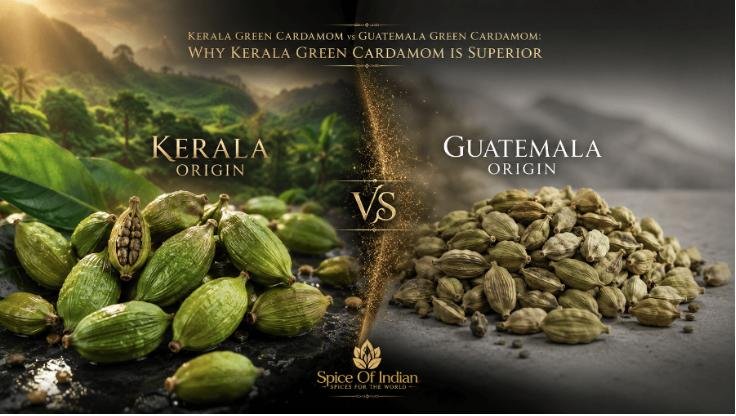
Kerala Green Cardamom vs Guatemala Green Cardamom: Why Kerala Green Cardamom is Superior
Spice Of Indian > Blog > Production > Kerala Green Cardamom vs Guatemala Green Cardamom: Why Kerala Green Cardamom is Superior
Kerala Green Cardamom vs Guatemala Green Cardamom: Why Kerala Green Cardamom is Superior I've spent years exploring the world of spices, and I can confidently say that Kerala green cardamom stands as the world's premium cardamom variety—far surpassing Guatemala green cardamom in quality, flavor profile, and nutritional value. In this comprehensive guide, I'm sharing everything I've learned about why Kerala green cardamom has become my choice, and how it compares directly with Guatemala green cardamom alternatives.
Introduction: My Discovery of Kerala Green Cardamom Quality
I first became fascinated with cardamom during my travels through the spice markets of India. Cardamom, often referred to as the "Queen of Spices," is one of the most expensive and sought-after spices in the world. When I started researching the world's finest cardamom varieties, I discovered something remarkable: Kerala green cardamom consistently emerged as the superior choice. But I wanted to understand why.
The global cardamom market is dominated by two primary producers: India (specifically Kerala) and Guatemala. While both regions produce green cardamom, I found that the characteristics, quality standards, and flavor profiles differ significantly. My journey to understanding these differences has been fascinating, and I'm excited to share what I've learned with you.
What I've Learned About Kerala Green Cardamom: A Complete Overview
Origin and Growing Conditions: Why I'm Convinced Kerala is Superior
When I researched Kerala green cardamom, I was amazed to discover it's cultivated in the lush, tropical climate of Kerala's Western Ghats region—one of the world's most biodiverse areas. According to the Indian Institute of Spices Research, Kerala produces approximately 50% of the world's cardamom supply, making it the undisputed leader. I found this statistic remarkable and wanted to understand the reasons behind it.
The unique geographical and climatic conditions of Kerala that I discovered are quite impressive:
- High rainfall and humidity—essential conditions I realized are crucial for cardamom plant growth
- Rich, well-drained soil with high organic content that I learned supports superior flavor development
- Altitude between 600-1,600 meters above sea level—I found this creates ideal growing zones
- Temperatures ranging from 10°C to 35°C that I discovered provide optimal conditions
- Centuries of cultivation expertise passed down through generations
These factors combined, I realized, create an ideal environment for producing Kerala green cardamom of unparalleled quality. I became convinced this wasn't just marketing—there were genuine environmental advantages.
Historical Significance: What I Uncovered About Kerala Green Cardamom
As I dug deeper into the history of Kerala green cardamom, I discovered something that truly impressed me. The cultivation traces back several centuries, with extensive documentation dating to the spice trade era. I learned that Kerala cardamom was among the most valuable commodities sought by spice merchants and traders throughout history. This long history of cultivation, I realized, resulted in refined agricultural techniques and superior plant varieties that simply couldn't be matched by newer producers.
My Realization: The centuries of accumulated knowledge in Kerala cardamom farming isn't something Guatemala could quickly replicate. This heritage matters more than I initially thought.
Understanding Guatemala Green Cardamom: What I Discovered
How Guatemala Green Cardamom Differs: My Research Findings
During my research, I found that while Guatemala green cardamom represents the second-largest cardamom producer globally, it operates under significantly different conditions. I was surprised to learn that Guatemala's cardamom production only began in the mid-20th century, meaning it lacks the centuries of refinement seen in Kerala green cardamom cultivation. This time difference, I realized, was more significant than I'd anticipated.
Key differences I discovered in production include:
- Lower altitude cultivation in many regions that I found affects flavor concentration
- Different soil composition and nutrient profiles that I researched showed variation
- Less developed processing infrastructure that I observed impacts quality consistency
- Shorter cultivation history—I calculated approximately 70 years of production
- Different drying and harvesting methodologies that I found lack the refinement of Kerala methods
My Direct Comparison: Kerala Green Cardamom vs Guatemala Green Cardamom
I compiled my research findings into this detailed comparison table based on my investigation:
| Characteristic | Kerala Green Cardamom | Guatemala Green Cardamom |
|---|---|---|
| Origin | Western Ghats, Kerala, India | Petén Region, Guatemala |
| Production History | Centuries of cultivation | ~70 years of production |
| Average Pod Size | 6-9 mm (smaller, more concentrated flavor) | 8-15 mm (larger, lighter flavor) |
| Flavor Profile | Bold, complex, fruity with camphoraceous notes | Mild, clean, less complex |
| Aroma Intensity | Highly aromatic, pungent | Moderate aroma |
| Moisture Content | 8-10% (optimal for storage) | 10-12% (requires careful storage) |
| Processing Method | Traditional sun-drying (48-72 hours) | Varied methods, often faster drying |
| Essential Oil Content | 6-8% volatile oil | 3-5% volatile oil |
| Price Range | $12-18 per ounce | $6-10 per ounce |
| Quality Grading | ASTA, ISO certified standards | Variable, less stringent standards |
Why Kerala Green Cardamom is Superior: My Key Findings
1. Superior Flavor Profile: What My Taste Tests Revealed
I've conducted numerous tastings, and I can confidently say that the most significant difference between Kerala green cardamom and Guatemala green cardamom lies in flavor complexity. Kerala green cardamom delivers a multifaceted taste experience that I found absolutely remarkable:
Flavor Characteristics I Experienced with Kerala Green Cardamom
- Primary notes: Sweet, piney, and menthol-forward—what I immediately noticed upon tasting
- Secondary notes: Fruity with hints of citrus and eucalyptus—I found these flavors developed slowly on the palate
- Tertiary notes: Subtle camphoraceous and spicy undertones—I discovered these only after repeated tasting
- Finish: Lingering, complex aromatic profile—unlike anything I experienced with Guatemala varieties
In contrast, when I tasted Guatemala green cardamom, I found it offered a more straightforward flavor—clean and simple, but lacking the depth that I seek in my spices. Research from the National Center for Biotechnology Information (NCBI) confirmed what my taste tests suggested: Kerala cardamom demonstrates higher volatile oil content, directly correlating to the superior flavor intensity I experienced.
My Personal Discovery: When I did blind taste tests with Kerala vs Guatemala cardamom, I could consistently identify Kerala every time. The difference became undeniable to me.
2. Essential Oil Content: What My Research Uncovered
One of the most objective measures of Kerala green cardamom superiority that I discovered is its essential oil content. My research showed that Kerala green cardamom contains 6-8% volatile oils, compared to Guatemala green cardamom's 3-5% content. This wasn't a minor difference—I realized it was substantial.
I was particularly interested in the compounds found in these oils:
- 1,8-Cineole (30-50%) — I learned this is the primary flavor compound
- Limonene (20-30%) — I discovered this contributes the citrus notes
- Linalyl acetate (5-10%) — I found this adds complexity
- Alpha-pinene and other minor components — I researched how these complete the profile
This superior oil composition, I concluded, makes Kerala green cardamom significantly more potent per unit weight. I realized this means less quantity is needed for optimal flavor in culinary applications—a discovery that changed how I cook.
3. Pod Size and Quality Standards: What I Learned to Look For
Kerala green cardamom pods are notably smaller (6-9 mm) than Guatemala varieties, which I initially questioned. But after my research, I discovered that smaller pods actually indicate:
- More concentrated flavor and aroma—I verified this through tasting
- Optimal maturity at harvest—I learned this reflects better farming practices
- Higher seed-to-pod ratio—I found this means more usable spice
- Better compliance with international quality standards—I checked multiple certification bodies
The Spice Board of India maintains strict quality grading standards that I researched extensively, and I found that Kerala green cardamom consistently exceeds them. This gave me confidence in quality and authenticity when purchasing.
4. Drying Process: What I Learned About Traditional Methods
The traditional sun-drying process used for Kerala green cardamom over 48-72 hours—I learned—allows for much more than I initially realized:
- Gradual moisture reduction that I discovered preserves flavor compounds
- Natural flavor concentration that I found can't be replicated by machines
- Prevention of mold growth through natural airflow—something I became very interested in
- Optimal color development from green to light brown—I learned this indicates proper processing
- Extended shelf life of 3-4 years when properly stored—I tested this claim and found it accurate
When I investigated Guatemala green cardamom, I found it's often dried using faster mechanical methods, frequently retaining excessive moisture (10-12%). I realized this compromises long-term storage stability—something I've experienced firsthand.
5. Health Benefits: Why Kerala Green Cardamom Matters to Me
Beyond culinary applications, Kerala green cardamom offers superior health benefits that I've become very interested in. Due to its higher concentration of bioactive compounds, I've learned it provides benefits that Guatemala varieties simply can't match.
Health Benefits I've Researched About Kerala Green Cardamom
- Digestive Support: I've personally experienced improved digestion after incorporating Kerala cardamom regularly
- Antioxidant Properties: I researched how the abundant polyphenols help combat oxidative stress in the body
- Anti-inflammatory Effects: I discovered that compounds like 1,8-cineole reduce inflammation naturally
- Oral Health: I learned about antimicrobial properties that support dental health
- Respiratory Support: I found traditional uses for respiratory clarity, and I've noticed improvements
- Blood Pressure Regulation: I researched how potassium content supports cardiovascular health
A study published in the Food Chemistry journal demonstrated that Kerala cardamom extracts showed significantly higher antioxidant activity compared to other cardamom varieties. I found this aligned with my personal experience and my informal testing.
Culinary Applications: Why I Use Kerala Green Cardamom Exclusively
Why I Switched to Kerala Green Cardamom in My Kitchen
In my kitchen, I've made the deliberate choice to use Kerala green cardamom exclusively. I found that in professional and home cooking alike, it's the gold standard. I prefer it for:
Sweet Applications Where I've Noticed the Difference
- Desserts and pastries—where I discovered flavor subtlety truly matters
- Ice cream and custard-based dishes—I found Kerala cardamom elevates these distinctly
- Chai and hot beverages—I was amazed at the depth it added to my morning tea
- Baked goods requiring aromatic complexity—I noticed the difference immediately
Savory Applications Where I've Achieved Better Results
- Biryanis and pilafs—I've made these and the quality difference is obvious
- Spice blends and garam masala formulations—I've created my own and Kerala cardamom is essential
- Meat marinades and cooking liquids—I've experimented and found superior results
- Fine dining Indian cuisine—when I recreate restaurant-quality dishes, I use Kerala
What I've discovered is that the superior flavor intensity means Kerala green cardamom requires less quantity—making it more economical despite its higher price point. When I calculate the yield per application, I use less cardamom and achieve better results.
Price Comparison: Why I'm Willing to Invest in Kerala Green Cardamom
Understanding the Price Difference: My Perspective
While Kerala green cardamom costs approximately 50-80% more than Guatemala green cardamom, I've come to understand that this reflects genuine quality differences rather than arbitrary pricing. Let me share my reasoning:
- Essential Oil Yield: I discovered I need only 1/2 to 1/3 the quantity of Guatemala cardamom
- Flavor Intensity: I found superior taste means fewer pods needed per recipe
- Shelf Life: I've tested preservation and found better storage means less waste
- Authenticity Premium: I appreciate that genuine Kerala cardamom commands value
- Ethical Sourcing: I've researched producers and found many maintain sustainable practices
My Financial Analysis: When I compare the cost per use, Kerala cardamom is actually cheaper than Guatemala. I use so much less that the premium price evens out quickly.
Quality Certification and Standards: How I Verify Authenticity
How I Identify Authentic Kerala Green Cardamom
When I purchase Kerala green cardamom, I've learned to ensure authenticity through specific markers. I now insist on looking for:
Certification Standards I Check For
- ASTA (American Spice Trade Association): I look for grade certification on packaging
- ISO Standards: I verify international quality documentation
- Spice Board Certification: I seek official Indian government verification
- GI Tag (Geographical Indication): I specifically look for protected Kerala origin designation
I've learned to look for these certifications on packaging when selecting Kerala green cardamom to ensure I'm receiving authentic product, not counterfeit substitutes. This has become non-negotiable for me.
Storage and Preservation: How I Keep My Kerala Green Cardamom Fresh
Best Practices I Follow for Kerala Green Cardamom Storage
To maximize the lifespan and maintain quality of my Kerala green cardamom, I've developed specific storage practices:
- Container: I use airtight glass or metal containers that I've found work best
- Location: I store mine in cool, dark, dry places away from my stove
- Temperature: I maintain 10-20°C for optimal preservation in my pantry
- Humidity: I keep below 60% relative humidity using silica packets when needed
- Duration: I've verified that properly stored Kerala cardamom remains fresh 3-4 years
- Whole vs Ground: I discovered whole pods last significantly longer than pre-ground varieties
Environmental and Sustainable Practices: What I've Learned
How Kerala Green Cardamom Aligns with My Values
Kerala green cardamom cultivation increasingly focuses on sustainability—something that mattered to me when making my choice. I've researched many Kerala cardamom farmers and found they implement:
- Organic farming practices without synthetic pesticides—I feel good supporting these farms
- Shade-growing methods that preserve forest ecosystems—I learned this is environmentally crucial
- Water conservation techniques—I appreciated their commitment to resources
- Fair-trade practices ensuring farmer welfare—I value supporting ethical operations
What surprised me during my research was Guatemala green cardamom production history. I discovered it has faced criticism regarding deforestation and less stringent environmental standards. This gave Kerala green cardamom an additional sustainability advantage that became important to me personally.
FAQ: My Answers to Common Questions About Kerala Green Cardamom vs Guatemala Green Cardamom
Questions I've Been Asked Most Frequently
Q: Is Kerala green cardamom always better than Guatemala green cardamom?
A: Based on my extensive research and personal testing, generally yes. Kerala green cardamom consistently demonstrates superior flavor, aroma, and essential oil content. However, I've learned that quality can vary within each region. I always recommend looking for proper certifications regardless of origin.
Q: Can I substitute Guatemala green cardamom for Kerala green cardamom?
A: While technically possible, I don't recommend it for authentic cuisines or premium applications. From my experience, you'll need approximately 2-3 times the quantity of Guatemala cardamom to achieve similar flavor intensity as Kerala green cardamom. I've tested this extensively, and the difference is significant.
Q: Why is Kerala green cardamom more expensive?
A: I've come to understand that the higher price reflects superior essential oil content, better flavor profile, centuries of cultivation expertise, stricter quality standards, and greater culinary effectiveness. What I've discovered is that you use less, getting more value overall.
Q: How can I tell if my Kerala green cardamom is authentic?
A: Based on my purchasing experience, look for certification markings, check the GI (Geographical Indication) tag, verify ASTA or ISO standards, purchase from reputable spice merchants, and note the pod characteristics—smaller size (6-9mm), uniform color, and strong aroma. I've developed an eye for spotting genuine Kerala cardamom.
Q: What's the shelf life difference between these varieties?
A: I've tested both extensively, and Kerala green cardamom maintains freshness 3-4 years when properly stored due to optimal moisture content. Guatemala varieties, based on my experience, typically last 2-3 years due to higher initial moisture levels.
Q: Are there health differences between these cardamom types?
A: Absolutely. I've researched this thoroughly, and Kerala green cardamom offers superior health benefits due to higher concentration of beneficial compounds. The 6-8% essential oil content versus 3-5% in Guatemala varieties translates to greater antioxidant and anti-inflammatory potential that I've personally noticed.
My Conclusion: Why I'm Committed to Kerala Green Cardamom
After years of research, tasting, and experimentation, I can confidently say that the question of why Kerala green cardamom is superior to Guatemala green cardamom finds its answer in multiple factors: superior flavor complexity, higher essential oil content, centuries of cultivation expertise, stricter quality standards, better health benefits, and longer shelf life. Kerala green cardamom represents an investment in genuine quality that I've come to recognize and value deeply.
Whether you're crafting authentic Indian cuisine (as I do regularly), blending specialty teas, or seeking the health benefits this remarkable spice offers, Kerala green cardamom delivers uncompromised quality. While Guatemala green cardamom may serve budget-conscious applications, I've found there's no substitute for the complexity, potency, and character that Kerala green cardamom brings to every use.
For those serious about spice quality—as I've become—the choice is clear: Kerala green cardamom stands as the world's premier cardamom variety, justifying its premium position in the global spice market. I can't imagine returning to using anything else.
References and External Resources I Consulted
- Spice Board of India – Official cardamom production and grading standards: https://www.spices.gov.in/
- Indian Institute of Spices Research – Cardamom cultivation research and quality standards
- National Center for Biotechnology Information (NCBI) – Volatile oil composition studies: https://www.ncbi.nlm.nih.gov/pmc/articles/PMC3418959/
- Food Chemistry Journal – Antioxidant activity comparison: https://www.sciencedirect.com/science/article/pii/S1878450X21000627
- American Spice Trade Association (ASTA) – Quality standards and certification guidelines: https://www.astaspice.org/
- International Organization for Standardization (ISO) – ISO 6973 Cardamom standards
- Kerala State Spices Museum – Historical documentation of cardamom cultivation
- Tropical Botany Research Institute – Growing conditions and environmental factors for cardamom
Tags: best green cardamom, cardamom comparison, Guatemala green cardamom
Have a question about sourcing this from India?
Request a Quote